The Song That Ends With Maybe We Can Start Again
Which song construction should you choose?
I sympathise that by using the word "should," information technology sounds like I'll be telling you what song structure you must use. I don't want to do that.
There's simply 1 rule in songwriting: there are no rules.
So in this post, we'll go over the different parts of a song yous can apply, how you can order them, and tips for finding the correct construction.
Earlier nosotros dive into how to structure a song, allow's talk about the parts that make up the song construction.
The basic parts of a song are:
- Intro
- Verse
- Pre-chorus/Lift
- Bridge
- Break
- Outro
This is self-explanatory — the intro is the introduction to the vocal. And it's ane of the most important parts.
Co-ordinate to Music Mechanism, about 35% of listeners volition skip a song within the first 30 seconds and nearly half of listeners skip a song before it'due south over. That'south why your intro has to grab the listener's ear and agree onto it.
Think of the intro as a starting time impression — a handshake and a hello. First impressions can stick for a long time and make or pause a human relationship.
Verses give the listener an idea of what the song is about. They should back up the chief idea (chorus) while too moving the song forward.
If the chorus is king, then the verses are the bearers of the litter.
The pre-chorus (aka the lift) is kind of like a "go prepare for information technology!" before the chorus. It tin can help build anticipation, either by increasing the volume or rhythm or by pulling back and creating tension with silence. It, similar the chorus, may repeat the same melody or lyrics, often ending with an unresolved tune.
The chorus should convey the main thought of the song with the nigh memorable melody of the song. It usually repeats itself melodically, musically, and/or lyrically — this method is sometimes chosen the claw, which some people use synonymously with chorus.
The chorus is what the listener is waiting for — information technology should be the best role of the song. If you don't get the listener by the chorus, then y'all don't get the listener at all.
How do you lot find a tune?
I am very gratis flow about that. Even when I write music or someone plays me something I don't like to sing to it, I like to non listen to information technology and let it just flow, so just get-go singing melodies. I merely brand them upwardly.
I call back that most of my songs are the kickoff or 2nd accept that I do of the melody. I retrieve there'due south something about that, the spontaneity–I had a record called Heart to Oral cavity, my final record that was kind of about that very thing, when I'm singing and making up the initial melodies to a song, I just do whatever comes out. Whatever comes off the summit of my caput. Information technology'southward really fun for me now, I take gotten to a point where I am channeling whatsoever is in the ether.
A bridge helps pause up the repetitiveness of a song and add together an element of surprise. Information technology should present a new angle to the principal thought. It'southward kind of similar a rogue verse with different chords, rhythm, and melody.
A break is commonly an instrumental break that allows for some animate room. It can also aid build apprehension and transition to a completely new function of the song or into another song.
Like the intro, an outro is self-explanatory — it's the finish of the song. Information technology closes the vocal out, whether information technology'south with an instrumental role, a tag, or a brand new role.
Now we can talk about putting these parts together to structure a song. Writing a song is similar digging for dinosaur bones — you find a bone, one after the other, and assemble them together to brand a fossil.
And then we're going to await at the most common song structures in modernistic music.
Keep in mind that the order in which the different parts announced in the structure can vary. For instance, you can take a Verse-Chorus-Verse-Chorus-Bridge-Chorus structure but have the gild exist Verse-Poetry-Chorus-Bridge-Chorus. But it still has all of the elements for that construction (Verse, Chorus, and Span).
How tin can someone improve their songwriting skills?
I think really the best way and the only manner is to keep writing songs. It is unbelievable what will happen if you go along writing songs; unlike songs are stepping stones to other songs, often.
Also, you kind of realize and find your voice every bit far as the mode that you write. I feel like a lot of successful people have a signature to their writing. Not to say that they write the same song over and over, but there is definitely a fingerprint to information technology. Write a agglomeration of songs. Continue writing songs. Never cease.
This is probably the almost usually used structure today, especially in pop music. If you were to listen to the peak 10 songs on the Billboard Elevation 100, well-nigh or all of them would have a VCVC structure or its shut cousin, Verse-Chorus-Verse-Chorus-Bridge-Chorus.
So if yous're looking to become a Professional Songwriter, get comfortable writing in this structure.
Examples of songs with a Verse-Chorus-Verse-Chorus structure:
- "Smoke On The Water" by Deep Imperial
- "All You Need Is Dearest" by The Beatles
- "Foxy Lady" by Jimi Hendrix
Many popular songs use a Verse-Chorus-Poesy-Chorus-Span-Chorus construction. The bridge helps add surprise or variance to the repetitiveness of the residue of the song. It can also add together a new angle to the theme or lyrics of the song while still supporting the master idea.
Examples of songs with a Verse-Chorus-Verse-Chorus-Span-Chorus construction:
- "Happy" by Pharrell
- "Every Breath Yous Accept" by The Constabulary
- "Set Y'all" by Coldplay
You lot can seriously change the feel of a song by adding a pre-chorus. It adds a little epicness in the centre of the song, right before the payoff. The pre-chorus — thematically and musically — should hint at what's coming in the chorus. In that way, it builds the tension right before the release.
You tin use this structure with or without a bridge. If yous do include a bridge, it should be on the shorter side, as should the pre-chorus.
Examples of songs with a Poetry-Pre Chorus-Chorus-Verse-Pre Chorus-Chorus construction:
- "Don't Wait Dorsum In Anger" by Oasis
- "Smells Like Teen Spirit" by Nirvana
- "Firework" by Katy Perry
This structure is less common, only still prevalent in music. And if you normally write Verse-Chorus songs, you should try the Verse-Poetry-Bridge-Poetry structure.
Instead of having a chorus, each poesy usually ends with something called a refrain. You could also call this a claw. This is basically i or two lines that echo at the stop of each verse — it has the aforementioned melody and lyrics or lyrical structure with pocket-sized adjustments for each refrain. Most of the time, the title comes from the lyrics of the refrain.
With this type of construction, yous'll desire to make the melody interesting, rather than uncomplicated since you'll exist repeating it over and over once more.
You lot tin can employ this construction without a bridge (Verse-Verse-Verse), equally Bob Dylan did with "Blowin' In The Wind."
Examples of songs with a Verse-Poesy-Bridge-Verse structure:
- "Nosotros Can Work It Out" by The Beatles
- "It's Still Rock And Whorl To Me" by Billy Joel
- "Have Yourself A Merry Little Christmas" past Hugh Martin
So now that we've covered the different parts of songs and how you can accommodate those parts, how practice y'all decide? Which one of these structures will piece of work best?
Well, that's subjective of course.
Information technology comes downwardly to only trying the different structures and seeing which one fits. But hither are some tips for finding the right structure for your next song.
How long does information technology have to get skillful at songwriting?
I mean, that'southward a very subjective question, obviously, I think that for me, no i knows except for you what you've gotten improve at, as far as songwriting. That's what is interesting about it. It is a very personal journeying, songwriting.
I find for myself that I have gotten better and amend at trimming the fat of what I am trying to say both melodically and lyrically, so I get to the point and endeavor non to waste material any line–so every inch of the song is serving the main cohesive theme of the vocal. I think that that'south your task as a Songwriter: to become this epic idea into a three to 4-minute catamenia.
The first thing to pay attending to is the feeling of the vocal. The groove, the emotion, the vibe.
Is it an ballsy song? So maybe endeavour a Verse-Chorus construction with a span, similar Coldplay's "Gear up You."
Is it a mellow vocal? Try the Verse-Verse form with an insightful lyric as the refrain.
Exercise you lot take a lot of things to say about the main idea? Examination out the structure with a verse, pre-chorus, chorus, and span.
The bespeak is, note the feel of the song and observe a structure that you call back fits.
The idea of your vocal can help you choose the construction, too.
For example, if yous're writing a vocal with a storyline and characters, yous could try the all-verses construction to help move the story forth.
Or if you're writing a break-upwards song, you could have the main lament in the chorus and and then support that in the verses, using angles similar "remember how much fun we had together?" and "think of how pitiful life would exist if we're not together."
You get the point. Let the construction elevate the story of your vocal.
Sometimes, information technology just comes down to what feels right. What feels the most natural to y'all? Where do you sense the song going?
If you lot feel like the song should build, build information technology into a chorus or epic bridge. If you retrieve the next department of your song should mellow out, drop down into a refrain at end of the verse.
In other words, go with your gut. Your gut is unremarkably right.
Now for a bit of history. Wait, don't get out. I'll keep information technology short and interesting.
There's some other term we didn't encompass: strophic.
The strophic song construction goes way back: dorsum to ancient Greece (doesn't everything?). A strophe dorsum and so was a section of a song where a chorus of singers chanted something together.
And every bit time went on, more and more than Songwriters started using strophes and its definition got looser and wider. Nowadays, strophe is defined as "a rhythmic system composed of ii or more than lines repeated as a unit," according to Merriam-Webster.
So a song with a strophic construction, at least today, means a song built out of sections. In other words, "a song with a defined structure."
Let'southward go dorsum to the Greeks. The ancient Greeks also gave us the term "Greek chorus," where a handful of Actors would sing or chant together in the eye of a live performance. They would make it like shooting fish in a barrel to sing and retrieve so the audience could join in.
This would eventually become what we know as the chorus.
And remember that term refrain? That came from the French word "refraindre," which means "to echo."
Today, these terms are used to assist usa organize our songs, convey a articulate idea, and move people with our music. We have the Greeks and French to thank for that.
Knowing the parts and possible structures of a song are helpful, merely this all really boils down to "what does your gut say?" Choosing a structure comes down to your preference, as does your whole songwriting process and musical taste.
These mutual song structures can really help you write a focused and impactful song.
Need more than songwriting inspiration? Check out our manufactures on writing lyrics when y'all're stuck and what Songwriters can learn from Comedians.
What are the different song structures?
Alison Stolpa (Careers in Music Staff)
The most mutual vocal structures are:
- Verse – Chorus – Verse – Chorus
- Poetry – Chorus – Verse – Chorus – Span – Chorus
- Verse – Pre-Chorus – Chorus – Poesy – Pre-Chorus – Chorus
- Verse – Verse – Bridge – Verse
What is the bridge in a song?
Alison Stolpa (Careers in Music Staff)
A bridge literally helps bridge different parts of a vocal past calculation a new element into the structure. Often, a bridge is used to separate repeating choruses or verses in a vocal, adding a whole new vibe to the track by taking the songwriting in a different direction.
For a more in-depth look at bridges in songs, check out our blog on the topic.
What is chorus and poetry?
Alison Stolpa (Careers in Music Staff)
The chorus is the part of a song that repeats multiple times throughout the vocal. Choruses utilise the aforementioned lyrics and melody each time they announced in the vocal. Choruses are catchy. They're the function of the vocal you're almost likely to sing along to.
Verses tell the "story" of the vocal. Although sometimes Songwriters repeat a verse for artistic effect almost the terminate of the song, most often, verse lyrics are different each time while the melodies stay the aforementioned. Verses are the prelude to the chorus.
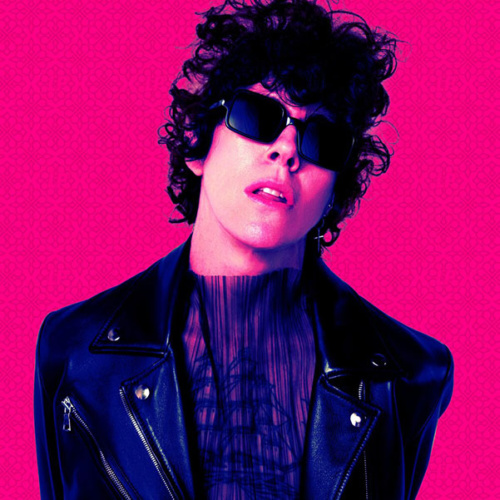
LP
In that location'southward this girl in the corner and she's small, really small-scale, and she looks similar a boy, and she'south seething with emotion, with rage and honey – because she'southward alone, because nosotros're all alone, because our parents didn't become it. She but institute out faster.
Her skin is thinner considering her heart is bigger. Her heart pushes confronting the pare, stretching it, sometimes too much.
She is a bloodletter, this girl. "A bloodletter of emotion," she says.
I think, given the right or the wrong moment, yous are likewise.
"I'm like a singing fucking banshee," she says. "My music errs on the histrionic side, only that's how I feel, you know, I endeavour to just let information technology seep out because it just hurts me if I don't. I put it all on the line, you lot know, I remember I am possessed past the spirit of a gambler, the big bicycle. I've put it all on crimson 27." She could lose information technology all right now.
This is LP.
Born Italian. New York. Yous've got to understand that; the hottest claret, the toughest city, the smallest girl.
Today she is five' iii" and just over a hundred pounds simply her sound is anthemic, maxed out. You don't believe your ear-eyes when you see-hear, pealing from the trunk of one fighting with non plenty, the music of and then, and then much. It is the music of emotional emergency, a prayer sung loud into a bottle and bandage out to ocean.
"When they encounter someone like me," she says, "yous can call up, oh shit, I can be like that."
I retrieve of Judy Garland, Bjork, Freddie Mercury if he had to deal with being a fucking daughter. From a little match, a conflagration.
"I'grand like, just a very, very emotional, sensitive motherfucker. I'thou only constantly worried well-nigh everything. But I'm trying to send a message to people that it'due south going to be okay. They run across the person who makes the music and I want them to know, similar, I'm skilful. Y'all know? I'm still sad, I'm however angry, just I'grand skilful. I desire them to know that."
LP is the medicine. She is practiced for heartbreak, which she knows, and in a manner, lives in. "I'chiliad e'er scared to lose someone," she says. "I'yard very cognizant of the fact that information technology could all be gone in a second."
She writes from that, sings from that. The annoyance, the grain of ocean-flooring sand troubling the oyster. It'due south loss. It's always in that location.
Her mother died when she was a teenager. She sang too —a vocalization, LP remembers, that "was very operatic, kind of like Maria Callas with a Julie Andrews cleanness to her tone."
Loss, loss. I've lost too.
She'll never recover, but there is the mounting promise, the certain knowledge, hard-earned, that "you can wield suffering, which is strength and power."
So it works like this: loss, loss, pearl.
LP is the ability crawling itself out of the ashes. I'1000 worried near her. She doesn't look like she'll brand it — then y'all hear. And then y'all know. "Everyone in the audience, I experience similar I desire to literally look them in the eye the whole time." She sings:
my church is you
my church is dearest
my church includes all of the above
no questions asked
no one to judge
my church is you and e'er was.
The more she loses, the more than we gain. The more than we gain, the less she loses.
"I desire anybody," she says, "to know they can feel condom."
Church, no church. Gay, not gay. The bloodletting'southward the same.
The blood-pearls of a poet-oyster who has striking songs and record deals and plays sold out shows all over the earth and goes to bed saying to herself, "I beloved, I honey, I dear, I love…"
cunninghamhimpeas.blogspot.com
Source: https://www.careersinmusic.com/song-structure/
0 Response to "The Song That Ends With Maybe We Can Start Again"
Post a Comment